
Appeal Process from a Michigan Appellate Lawyer
You may have a valid issue for appeal if you were wrongfully convicted or the judge and prosecutors violated your rights. It may be possible to have your conviction reversed and get charges dismissed.

Michigan Appellate Defense Attorneys
The appeal or appellate process in Michigan plays a crucial role in the criminal justice system, providing defendants with an avenue to challenge decisions made in their cases. Compelling appellate arguments can significantly impact the outcome of a criminal appeal. While the success of an argument depends on various factors, such as the specific facts and legal issues involved, certain arguments have proven to be particularly effective in criminal appeals. Appeals are complex, and minor errors can result in a dismissed appeal and the loss of your opportunity for appellate review. Closely following each procedural step helps ensure that the appellate court has the opportunity to review the factual and legal issues that concern you.

These are the basic steps in filing an appeal of a criminal conviction:
The criminal appeal process in Michigan is complex, and few lawyers are qualified and capable of providing a strong appeal of a criminal conviction. There is no room for errors and mistakes in an appeal. If you are going to file an appeal, you should not take chances with an inferior lawyer. Do you want to win? An experienced appellate lawyer with a proven track record of success gives you the best odds of success.
1. Filing the Claim of Appeal
Within 42 days of a felony conviction, the defendant must file a Claim of Appeal with the Michigan Court of Appeals. The defendant preserves the right to appeal the conviction and sentence by filing a timely Claim of Appeal. The Claim does not have to state the basis for the appeal, merely that the defendant is taking an appeal. Along with the appeal, the defendant must file a copy of the lower court docket entries, proof that the transcripts of all the lower court proceedings have been ordered, and the Michigan Court of Appeals filing fee (currently $375.00). Filing a timely appeal is crucial in the Michigan appeal process.
Note: Some post-judgment motions, such as a Motion for New Trial, may extend the 42-day timeline.
2. Order the transcripts
Contact the court reporter (or reporters) in the trial court to order the transcripts of all pertinent hearings, motions, the trial, and sentencing. In Wayne County, there can be up to 10 court reporters assigned to a case; in Oakland and Macomb, for example, there is usually one or two per case. The court reporter will require a money deposit to begin preparing the transcripts. Once the deposit is received, they will notify the Court of Appeals that the transcripts have been ordered and provide their expected completion date. The appellate attorneys are responsible for babysitting the court reporter to ensure the certificate is filed promptly.
3. Prepare and File the Brief
Fifty-six (56) days after the transcripts are filed in the Court of Appeals, the Appellant’s Brief on Appeal will be due in the Court of Appeals. The filing of Appellant’s Brief is another critical time frame in the appeal process in Michigan. The Brief on Appeal is generally a complex and law-intensive document. The more errors claimed in the case, the more complex the appellate brief will be. The brief will contain the defendant’s legal arguments that entitle him to relief. The legal arguments are generally separated into subsections of the brief. The Michigan Court Rules outline the content, format, and filing requirements of the brief. There must be a Table of Contents, an Index of Authorities, a concise statement of the questions presented, a statement of the pertinent facts, and the argument portion. It takes many years for a top criminal defense appellate lawyer to perfect a persuasive style in appellate pleadings.
4. Response to the Appellant’s Brief
Under the Michigan Court Rules, the prosecution must file its response to the Appellant’s brief within 35 days of the filing of the Appellant’s brief (absent any extensions of time, which are liberally granted). Extensions can be sought by motion, but are more commonly granted by stipulation (an agreement between the parties). If the prosecution fails to follow the appeal process in Michigan, it can lose its right to brief an issue or argue the appeal.
5. Reply to the Prosecution/Appellee Brief
The appeal process in Michigan provides the Defendant-Appellant with 21 days to reply to the arguments outlined in the prosecution’s brief from the day the reply is filed. The reply does not simply reiterate the arguments in the first brief; it is specifically meant to reply to the arguments made by the prosecution and provide law to counter any unanticipated arguments (factual or legal) that the prosecution included in its Response Brief.
6. Oral Argument Before the Court of Appeals
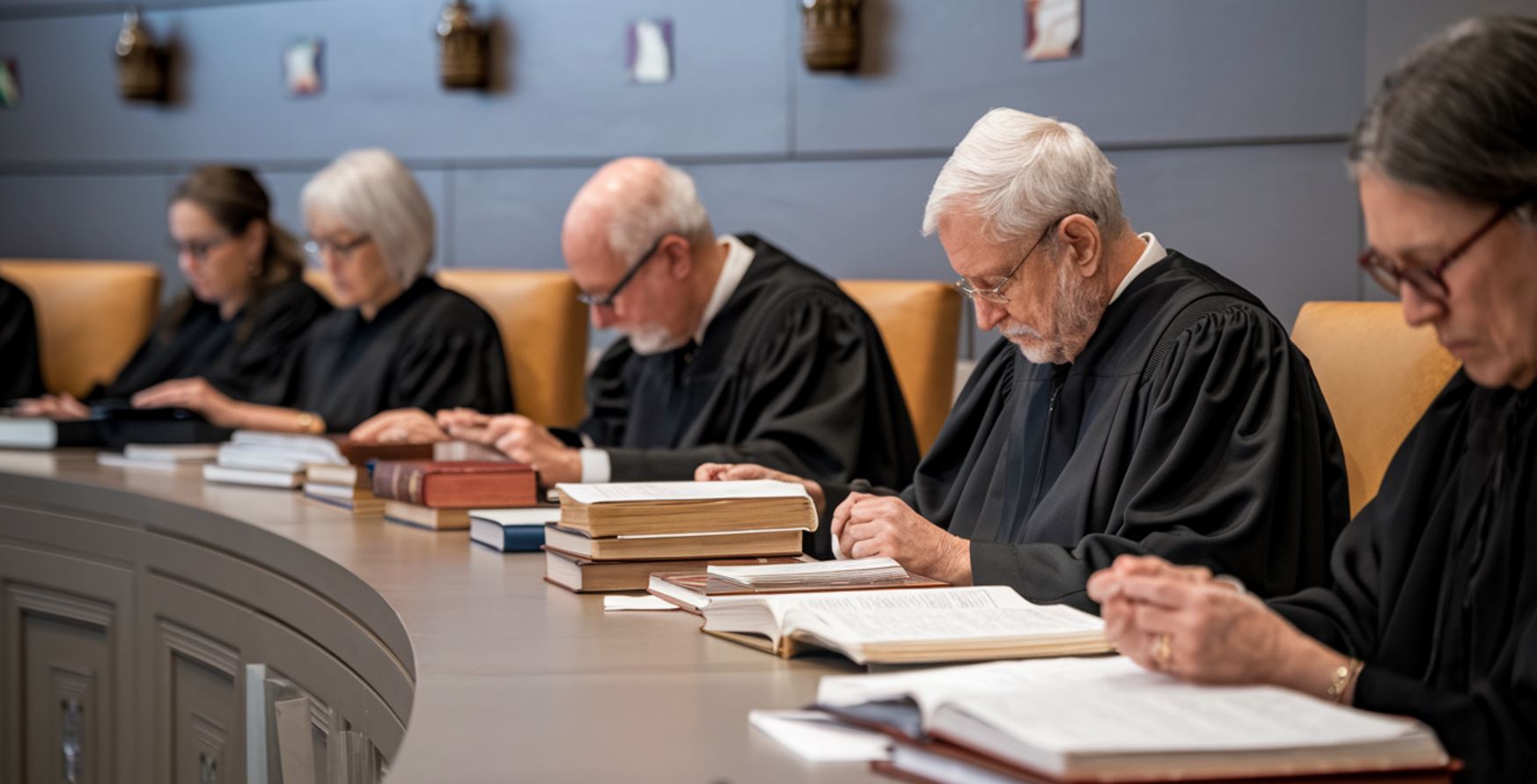
After all briefs are filed, the Michigan Court of Appeals will likely schedule oral arguments. This is the last step in the appeal process in Michigan before the Michigan Court of Appeals renders a decision. Arguments are made before a panel of 3 judges and are limited to 15 minutes. The appellate arguments are open to the general public, defendants on bond, and family members. If the defendant is in custody, he will not be allowed to attend an oral argument on the appeal. The judges will typically ask numerous questions during the presentation of the argument. The questions are asked of both the defendant/appellant and the prosecution/appellee. Generally, the judge’s questions concern the issues the judges find most concerning or troubling about an issue on appeal.
7. Following the oral argument
The Court of Appeals will issue its written opinion either granting or denying the appeal (reversing the trial court, affirming the trial court, or remanding the case for clarification). The decision is almost always in writing and can take quite some time to complete. If the defendant wins, the Court of Appeals, depending on the relief requested, may order the defendant’s release and dismissal of the case, grant a new trial, or remand the case to the trial court for resentencing. The prosecution has a limited time to request an appeal before the Michigan Supreme Court. If the defendant is in custody, they will generally remain in custody pending the filing of the additional appeal. If the ruling favors the prosecution/appellee, the defendant can appeal to the Michigan Supreme Court.
The Most Successful Arguments on Appeal in Criminal Matters
Some of the most successful arguments during the appeal process in Michigan include the following:
- Violations of Constitutional Rights: One of the most compelling arguments on appeal is the violation of constitutional rights. Defendants often challenge their convictions or sentences by asserting that law enforcement, the prosecution, or the judge infringed their constitutional rights during the investigation or trial. For example, arguments involving violations of the Fourth Amendment (unlawful search and seizure), the Fifth Amendment (self-incrimination), the Sixth Amendment (right to counsel), or the Fourteenth Amendment (due process) have a high chance of success if supported by solid evidence and relevant legal precedent.
- Ineffective Assistance of Counsel: Claims of ineffective assistance of counsel can be persuasive in appellate courts. Suppose a defendant can demonstrate that their defense attorney’s performance fell below the accepted standard of competence and that it had a detrimental effect on the outcome of their case. In that case, an appellate court may overturn the conviction or order a new trial. However, it is essential to note that establishing ineffective assistance of counsel can be challenging, as courts generally give deference to trial counsel’s strategic decisions.
- Errors in Jury Instructions: Jury instructions play a crucial role in guiding jurors on the applicable law in a case. If the trial court provided incorrect, confusing, or incomplete jury instructions, it may constitute reversible error. Appellate courts carefully review the jury instructions to ensure they accurately conveyed the legal principles and did not prejudice the defendant. Errors in jury instructions that substantially affect the defendant’s rights can lead to a successful appeal.
- Prosecutorial Misconduct: When prosecutors engage in misconduct during trial proceedings, it can undermine the fairness of the proceedings and violate a defendant’s rights. Examples of prosecutorial misconduct include making improper remarks during opening or closing statements, suppressing exculpatory evidence, or presenting false evidence. If a defendant can demonstrate that such misconduct occurred and had a prejudicial impact on their case, it can provide a strong argument for appeal.
- Insufficient Evidence: Appellate courts review the sufficiency of the evidence presented at trial to determine whether it was legally sufficient to support a conviction. If a defendant can show that the evidence presented against them was insufficient to prove guilt beyond a reasonable doubt, it may lead to the reversal of the conviction. However, appellate courts generally defer to the jury’s factual determinations, and the threshold for overturning a conviction on insufficient evidence grounds is high. Additionally, a defendant may be precluded from arguing the insufficiency of the evidence unless they first file a Motion for New Trial.
While the success of arguments on appeal in criminal matters depends on the specific circumstances of each case, certain arguments have proven to be more persuasive in appellate courts. Constitutional violations, ineffective assistance of counsel, errors in jury instructions, prosecutorial misconduct, and insufficient evidence are among the most successful. A thorough understanding of the law, diligent research, and persuasive advocacy are essential to mounting a robust appellate argument that leads to a favorable outcome for the defendant.

Michigan Appellate Defense Counsel – The Appeal Process in Michigan
Our appellate team handles appeals from convictions in circuit and district courts in Oakland County, Macomb County, Wayne County, Washtenaw County, Livingston County, and throughout Michigan’s circuit and district courts. We have the experience, reputation, and skill to provide you with the best possible appellate representation. If you still have questions for a Michigan criminal defense attorney, please call LEWIS & DICKSTEIN, P.L.L.C. for a free consultation and confidential case evaluation.
Call us today at (248) 263-6800 for a free consultation or complete an online Request for Assistance Form. We will contact you promptly and find a way to help you.
We will find a way to help you.
We Are Not Afraid to Win!