ATF Firearms Investigations in Michigan: Federal Gun Charges and Defenses
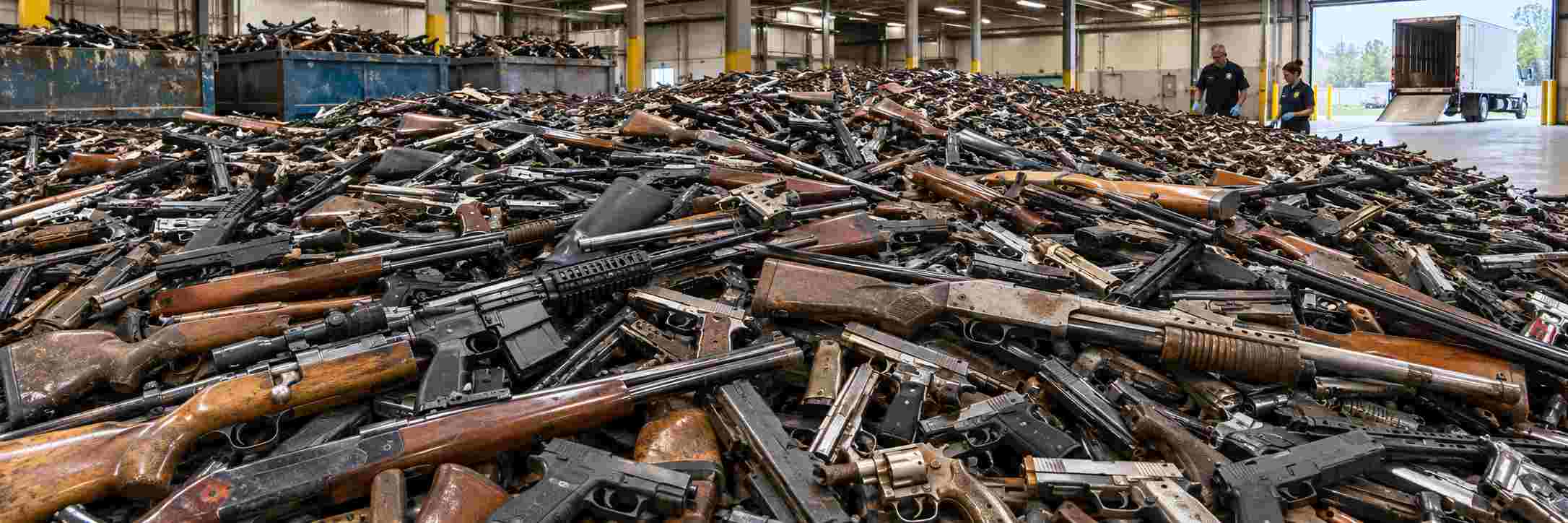
The Bureau of Alcohol, Tobacco, Firearms and Explosives (ATF) leads investigations of major firearm crimes in Michigan and throughout the United States. Although federal gun charge cases can result in severe penalties, that is not always the case.

The Best Defense to a Firearm and Ammunition Charge is a Good Offense!
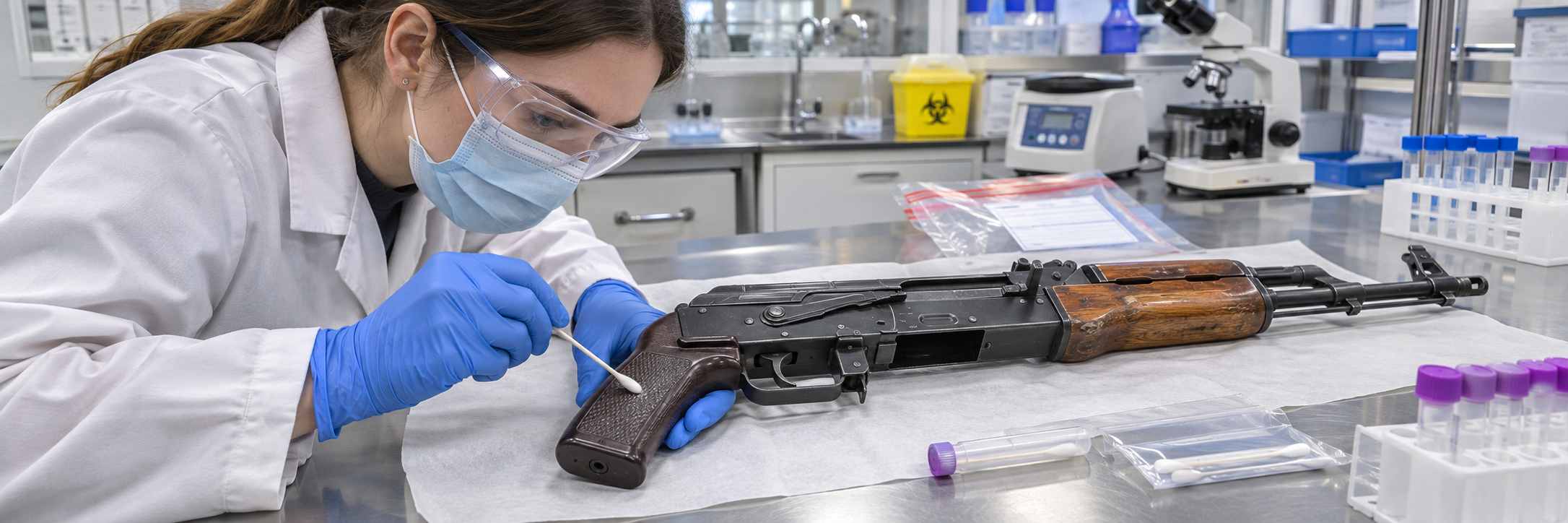
An ATF firearms investigation in Michigan can involve far more than the gun itself. Federal agents may rely on firearm traces, ballistic comparisons, fingerprints, DNA, digital evidence, purchase records, ATF forms, surveillance, and witness statements when deciding whether to pursue federal charges. The ATF’s regulatory changes have not reduced criminal firearms enforcement, and anyone under investigation for a federal gun charge needs to understand what the government’s evidence actually proves, how it was obtained, and where its weaknesses may be.
What ATF’s New Changes Mean for Firearms Investigations
The Bureau of Alcohol, Tobacco, Firearms and Explosives has made several recent and significant changes. The new ATF Director has also described the ATF’s current regulatory approach as a new era of reform, emphasizing the reduction of unnecessary burdens on lawful firearms owners and businesses while clarifying certain areas of firearms regulation. That change in regulatory philosophy should not be mistaken for an end to serious federal gun investigations. ATF continues to investigate alleged violations of the Gun Control Act, National Firearms Act, federal firearms-trafficking statutes, and other federal laws. The agency’s own statistics show just how active that enforcement remains: ATF reported initiating 22,885 firearms cases and recommending 8,052 federal gun cases for charges during the past year.
Common Federal Firearm Charges Include:
- Trafficking Firearms:
- Straw Purchase of Firearms:
- Possession or Sale of a Machine Gun:
- Possession or Sale of a Firearm Switch:
- Felon or Prohibited Person in Possession of a Firearm
- Armed Career Criminal
- Using a Firearm in the Commission of a Felony
- Possession of Drugs While Armed
News about regulatory reform can create a false sense that federal firearms enforcement has broadly relaxed. Whether particular conduct violates federal law depends on the statute and regulations that applied when the conduct occurred, the person’s intent where intent is an element, and the evidence the government can produce. A proposed regulatory change should never be treated as permission to disregard an existing legal requirement.
Two ATF Regulatory Proposals Deserve Careful Attention
The ATF’s July update highlighted two proposed rules affecting firearms regulation. One concerns fingerprint and photograph requirements for certain firearms applications. Among the proposed changes is a more modern approach to identification documentation and certain fingerprint requirements.
The other proposal concerns National Firearms Act (NFA) firearms manufactured for United States government contracts that later fall out of those contracts. The ATF has proposed a procedure through which qualifying manufacturers could register certain firearms after the ordinary registration period. The proposal addresses a relatively specialized problem, but it illustrates why the status of a federal rule can matter enormously in a firearms case.
A proposal and a final rule are legally different things. A person under investigation for an alleged NFA violation, licensing offense, improper transfer, false application, or registration problem needs counsel to determine exactly what law governed the conduct at issue. The answer should come from the statute, the regulations then in effect, and the particular facts of the case rather than from a headline about a proposed change.
The ATF’s Enforcement Numbers Put Federal Firearms Investigations in Perspective
The ATF’s fiscal year data gives a useful picture of the agency’s workload. In addition to the 22,885 firearms cases initiated and 8,052 cases recommended for prosecution, the ATF reported 5,545 indicted cases and 4,061 convicted cases during the fiscal year. Those figures should not be treated as a conviction rate because the ATF specifically explains that the categories are snapshots of activity at different stages of cases that may span several years.
The same data shows how closely criminal enforcement of federal gun charges can intersect with the regulation of licensed firearms businesses. The ATF conducted 8,472 firearms compliance inspections in the fiscal year. Of those, 4,604 resulted in findings of no violations. Other inspections led to reports of violations, warning letters, warning conferences, license surrenders, revocation recommendations, and other dispositions.
For a federal firearms licensee, that means a compliance inspection deserves careful attention even when no criminal accusation has been made. Investigators may review acquisition and disposition records, Forms 4473, inventory, licensing information, and the business’s operations. Records developed during an administrative inspection can also raise questions that interest criminal investigators. An FFL who realizes that the government’s questions are moving beyond ordinary compliance issues should recognize that change before making unnecessary statements or decisions that become part of a criminal investigation.
A Firearm Trace Is an Investigative Lead, Not the End of the Case
Firearms tracing is one of the ATF’s most heavily used investigative tools. The National Tracing Center received 654,879 firearm trace requests during the fiscal year. A trace can ordinarily follow a firearm through its commercial distribution history and identify the first retail transaction, giving investigators a starting point when determining how a recovered firearm reached a particular person or location.
What a trace cannot establish by itself is just as important. The ATF expressly cautions that not every traced firearm was used in a crime and that firearms may be traced for different investigative reasons. The person who originally purchased a gun is not necessarily the person who possessed it when police recovered it, fired it, transferred it later, or committed an offense involving it.
Consider a firearm lawfully purchased several years before police recover it during an investigation. There may have been an intervening private transfer, theft, loss, lawful disposition, dealer transaction, or change in possession. Investigators still have to reconstruct what happened between the original purchase and the recovery. In a defense investigation, that history can matter as much as the trace itself because the trace may identify where the story begins without establishing how it ends.
Michigan’s Firearms Trace Data Shows the Importance of That Distinction
ATF reported that 9,786 firearms recovered in Michigan were traced during the calendar year. Pistols accounted for 7,389 of them. Detroit was listed as the recovery city for 5,713 traces, while Pontiac accounted for 312 and Southfield for 209.
Those numbers need context. The leading category reported with Michigan traces was carrying a concealed weapon, followed by firearm under investigation, aggravated assault, found firearm, dangerous drugs, possession of a weapon, and other categories. ATF warns that trace data is not a random sample of firearms used in crime, that not every traced firearm was used in a crime, and that the reported source of a firearm does not necessarily tell investigators how it was later obtained for unlawful use.
Michigan’s average reported time-to-crime for qualifying firearm traces was 6.98 years. That measurement reflects the time between the reported retail purchase and the later recovery of the firearm, when the ATF had sufficient information to make the calculation. It should not be read as evidence that the original purchaser was responsible for whatever event led police to recover the gun years later.
In a criminal case involving federal gun charges, those limitations can become important. Prosecutors must connect a particular defendant to the conduct charged in the indictment. A record showing that someone purchased a firearm at an earlier point in its history can be relevant evidence. Still, its significance depends on what happened afterward and what other evidence connects the accused to the firearm.

NIBIN Evidence Requires a Closer Look Than the Word “Match” Suggests
Ballistic evidence presents a similar issue. The ATF’s National Integrated Ballistic Information Network, commonly called NIBIN, allows law enforcement agencies to compare digital images of cartridge cases and other ballistic evidence. ATF reported 623,142 NIBIN acquisitions and 193,269 NIBIN leads during the fiscal year.
A NIBIN lead and a confirmed firearms examination are not the same thing. The ATF describes a NIBIN lead as an unconfirmed potential association identified after a trained technician reviews digital images. When confirmation is necessary, a firearms examiner can compare the physical evidence under a microscope and determine whether it supports a confirmed association.
That difference is easy to lose once a case reaches a police report, a news article, a preliminary examination, a grand jury, or a courtroom. The word “match” can make scientific evidence sound more absolute than the underlying process warrants. Defense counsel should determine what stage of analysis occurred, what evidence was compared, who performed the work, what conclusion was actually reached, and whether the government’s description fairly represents the examiner’s findings.
Firearm and Toolmark Examination – Junk Science Leads to Wrongful Federal Gun Charges and Convictions
Firearm and toolmark examination itself also deserves careful scrutiny. Examiners compare microscopic markings on bullets and cartridge cases to assess whether evidence may have originated from the same firearm. The National Institute of Standards and Technology has described traditional firearm and toolmark comparison as a process that involves examiner judgment and has continued research into more objective methods of measuring similarity and uncertainty.
None of that means ballistic evidence should automatically be rejected, but a skilled and experienced federal gun charges defense lawyer will scrutinize it. It means the evidence should be examined with the same care given to any other expert opinion. Depending on the case, an independent defense expert may need to review the physical evidence, laboratory documentation, photographs, test fires, examiner notes, reported conclusions, and the language used to describe the strength of the comparison.
The ATF Is Expanding Its Ability to Process Evidence in Federal Gun Charges Cases
ATF’s new Forensic Crime Gun Intelligence Laboratory at Wichita State University is another development worth watching. The laboratory is intended to expand the agency’s capacity to process firearms-related evidence and support investigations involving ballistic evidence, fingerprints, DNA, serial-number restoration, firearm examination, and crime-gun intelligence.
That expansion means future federal gun cases may involve several forms of forensic evidence developed from the same firearm. A gun might be traced through ATF records, examined for fingerprints and DNA, test-fired for comparison with recovered cartridge cases, and analyzed for a damaged or obliterated serial number. Digital evidence from phones, social media, location data, photographs, messages, or surveillance may then be used to place those laboratory findings into a narrative.
The defense has to separate those pieces rather than allow them to blend into a single claim that the government has “forensic evidence.” DNA can raise questions involving mixtures, transfer, collection, and interpretation. A fingerprint may show contact with an object without establishing when that contact occurred. A restored serial number can help investigators identify a firearm’s history without identifying the person who possessed it later. Ballistic evidence may connect a firearm to fired ammunition while leaving the identity of the shooter unresolved.
Common Federal Charges in an ATF Gun and Ammunition Case
The possible charges depend heavily on why the ATF became involved. Federal investigations can involve possession of a firearm by a prohibited person under 18 U.S.C. § 922(g), false statements in connection with a firearms transaction under § 922(a)(6), unlawful firearms dealing, straw-purchase allegations, firearms trafficking, unlawful possession or transfer of a firearm regulated under the National Firearms Act, or firearm allegations tied to drug-trafficking offenses and qualifying crimes of violence.
The penalties vary substantially from one offense to another. A knowing violation of § 922(g), including the federal felon-in-possession statute, can carry up to 15 years in federal prison under the current version of § 924(a)(8). A knowing violation of § 922(a)(6) can carry up to 10 years, and a violation of the National Firearms Act can also expose a defendant to as much as 10 years of imprisonment. Certain firearm offenses associated with qualifying drug-trafficking crimes or crimes of violence carry mandatory consecutive prison terms.
Maximum statutory penalties do not determine the sentence someone will actually receive. The charged offense, facts, criminal history, federal sentencing law, mandatory-minimum provisions, plea negotiations, evidentiary rulings, dismissed counts, acquitted counts, and other considerations can affect the result. A meaningful case evaluation therefore requires much more than looking up the maximum sentence attached to a statute.

The Defense Begins With What the Government Can Actually Prove
A federal gun case often turns on details that initially appear minor. If prosecutors allege possession, the location of the firearm, who had access to that location, whether the gun was concealed, who owned the vehicle or residence, what physical evidence was recovered, and what the accused allegedly said can all affect whether the government can establish actual or constructive possession.
Constructive possession deserves particular attention because it allows the government to pursue a possession charge even when the firearm was not found in the defendant’s hand or on the defendant’s body. A gun discovered in a shared house, borrowed vehicle, bedroom, closet, console, basement, or other location can raise difficult questions about knowledge and control. The presence of several people with access to the location can make those questions even more significant.
In a § 922(g) prosecution, the government must also satisfy the applicable knowledge requirement concerning the status that made firearm possession unlawful. Other federal gun charges may turn on intent, representations made during a transaction, the reason firearms were purchased or sold, the frequency and circumstances of transactions, or whether the government can establish that a defendant knowingly participated in another person’s unlawful conduct.
Search and seizure issues can be equally important. When agents recover a firearm from a home, vehicle, phone, business, storage location, or other protected area, effective defense counsel will examine how the government obtained access, what the warrant authorized, whether agents remained within its scope, whether consent was actually given, and whether the affidavit supporting the search established probable cause. Evidence that appears damaging must still be lawfully obtained before prosecutors can use it in the ordinary course of a criminal case.
What to Do When ATF Agents Make Contact
People sometimes make their most damaging decisions before they have been charged with anything. An ATF agent may describe a conversation as an opportunity to clear something up, obtain background information, or answer a few questions. A person who does not know what agents have already learned can easily provide a statement that fills a gap in the investigation, creates a new inconsistency, or supplies evidence the government did not previously possess.
There is no benefit in lying to federal investigators, destroying evidence, deleting communications, moving a firearm to hide it, or attempting to coordinate stories with potential witnesses. Those actions can make an existing problem substantially worse. At the same time, a person does not need to volunteer an interview simply because federal agents would like one. It is far too complicated for someone to figure out what to say and what to do without a skilled pre-charge attorney helping you.
If ATF agents have made contact, preserve any business cards, subpoenas, warrants, property receipts, letters, or other documents they provide. Make a careful record of what happened while the details are still fresh, including what agents asked, what was said, what was searched, and what was taken. Then speak with experienced federal criminal defense counsel before deciding whether any further communication with investigators is in your interest. The defense team with DICKSTEIN & AMBERG, P.L.L.C. can guide you through this process to ensure every avenue of avoiding charges is explored.
Why Early Representation Can Make a Difference in Federal Gun Charges
There can be a significant difference between entering a case while the government is still investigating and entering after an indictment has been returned. Before charges are filed, defense counsel may have opportunities to identify the scope of the investigation, communicate with agents or prosecutors, preserve favorable evidence, locate witnesses, obtain expert assistance, evaluate a search, address an inaccurate assumption, present information that changes the government’s understanding of the case, and take steps to prevent agents from arresting their client if charges are authorized.
Not every investigation can be stopped, and no lawyer can responsibly promise that charges will disappear. The point of early involvement is to understand the government’s theory while meaningful choices may still exist. Waiting until an arrest or indictment can leave the defense responding to decisions that have already been made. A proactive, early approach is almost always beneficial to the accused, as opposed to a reactive, late approach.
An ATF Investigation Is Serious, but the Government Still Has to Prove Its Case
The ATF has substantial investigative resources, and its expanding use of tracing, ballistic intelligence, forensic testing, digital evidence, and cooperation with state and local law enforcement makes federal firearms investigations increasingly sophisticated. Those resources can produce powerful evidence, but they do not convert an investigative theory into proof.
A firearm trace has limits. A NIBIN lead has limits. DNA, fingerprints, digital evidence, statements, and expert opinions each have to be examined in context. The government must still prove the elements of the charged offense beyond a reasonable doubt with admissible evidence, and constitutional protections continue to apply to searches, seizures, interrogations, and criminal prosecutions.
DICKSTEIN & AMBERG, P.L.L.C. approaches federal firearms cases by examining the government’s case at an extreme level of detail. Our team studies what investigators have established, what they have inferred, what remains unproven, whether the evidence was lawfully obtained, and what additional investigation or expert analysis can strengthen the defense. The objective is the best possible result available under the facts, evidence, law, procedural options, and the client’s goals.

What do I do if the ATF is investigating me?
If the ATF has contacted you, agents have seized a firearm, you received a federal subpoena or search warrant, or you believe a federal gun charge or an investigation is underway, the situation is not decided merely because the government has begun investigating. Important factual, constitutional, forensic, and strategic issues may still be unresolved. Getting experienced federal counsel, such as DICKSTEIN & AMBERG, P.L.L.C., involved early can protect those opportunities and allow the defense to begin working before the government determines what happens next.
Call us today at (248) 263-6800 for a free consultation or complete an online Request for Assistance Form. We will contact you promptly and find a way to help you.
We will find a way to help you.
We Are Not Afraid to Win!






















Key Takeaways
- The ATF leads investigations of major firearm crimes in Michigan, which can involve more than just the gun itself.
- Understanding evidence in ATF investigations is crucial; federal gun charge cases may have serious consequences despite regulatory changes.
- Key common federal gun charges include trafficking, straw purchases, and possession by prohibited persons, among others.
- Early representation by defense counsel can significantly impact the outcome of federal gun charges, giving opportunities for proactive engagement.
- Federal investigations require the government to prove every element of the charge beyond a reasonable doubt, despite the seriousness of the charges.
Table of contents
- ATF Firearms Investigations in Michigan: Federal Gun Charges and Defenses
- The Best Defense to a Firearm and Ammunition Charge is a Good Offense!
- What ATF’s New Changes Mean for Firearms Investigations
- Two ATF Regulatory Proposals Deserve Careful Attention
- The ATF’s Enforcement Numbers Put Federal Firearms Investigations in Perspective
- A Firearm Trace Is an Investigative Lead, Not the End of the Case
- Michigan’s Firearms Trace Data Shows the Importance of That Distinction
- NIBIN Evidence Requires a Closer Look Than the Word “Match” Suggests
- Firearm and Toolmark Examination – Junk Science Leads to Wrongful Federal Gun Charges and Convictions
- The ATF Is Expanding Its Ability to Process Evidence in Federal Gun Charges Cases
- Common Federal Charges in an ATF Gun and Ammunition Case
- The Defense Begins With What the Government Can Actually Prove
- What to Do When ATF Agents Make Contact
- Why Early Representation Can Make a Difference in Federal Gun Charges
- An ATF Investigation Is Serious, but the Government Still Has to Prove Its Case
- What do I do if the ATF is investigating me?