Federal Firearm Switch Charges in Michigan
Inside This Article
- What does federal law consider a machine gun when prosecuting firearm switch offenses?
- What are common federal charges that accompany firearm switch allegations in a case?
- What federal sentencing exposure and long-term consequences apply to firearm switch charges under federal law?
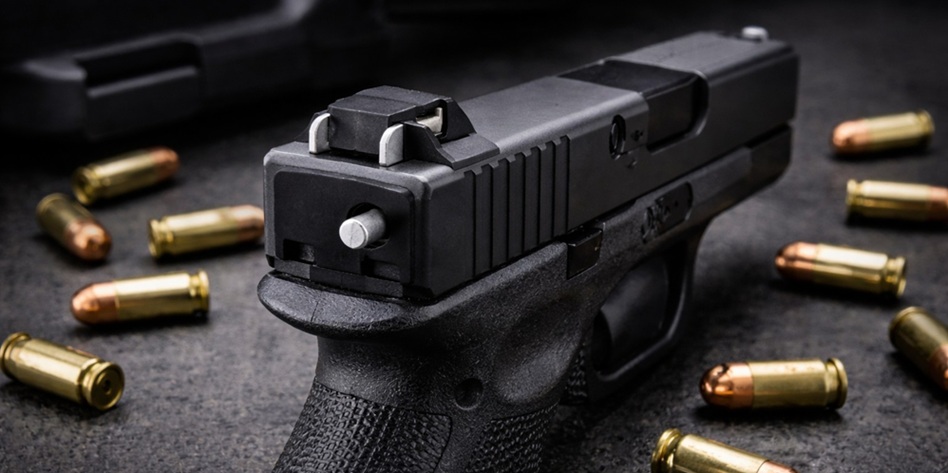
Federal firearm switch charges carry severe consequences. A Glock switch or auto sear, which is a device smaller than a coin, can place your freedom at risk.
What Federal Firearm Switch Charges Really Mean
Federal firearm switch charges arise when the government alleges possession, transfer, or trafficking of a conversion device designed to make a semiautomatic firearm fire automatically. Many people refer to these devices as Glock switches or auto sears. If the device allows a firearm to fire more than one round with a single pull of the trigger, or if it was designed for that purpose, federal law often treats the device itself as a machine gun. That classification triggers some of the harshest firearm penalties in the federal system.
These cases shock people because the alleged item looks insignificant. It fits in a pocket. It weighs almost nothing. Yet the law treats it as if it were a fully automatic weapon. Once prosecutors establish that classification, the case becomes a federal felony matter with life-altering consequences.
Why Federal Law Targets Firearm Switches So Aggressively
Federal firearms statutes define a machine gun broadly by design. The definition includes not only completed weapons, but also any part or combination of parts designed and intended to convert a firearm into one that fires automatically. That language removes defenses people assume exist. The government does not need to prove the device was installed. It does not need to prove that the firearm was ever fired automatically. In many cases, it does not need to prove that the defendant even owned a gun.
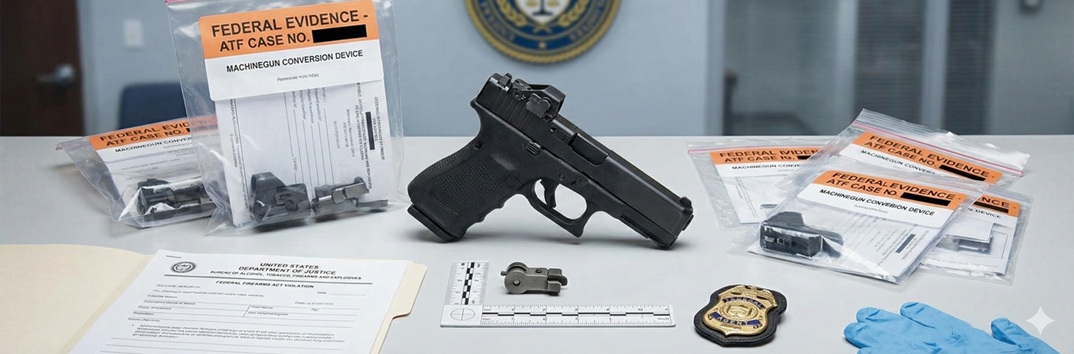
Once the government proves a device qualifies as a machine gun under federal law, direct or constructive possession alone can support felony charges. Courts have consistently upheld this framework. Federal prosecutors rely heavily on it, especially as these devices become more prevalent through online sales and international shipping. In many cases, the federal government monitors online vendors to track the sales of these devices and assist law enforcement in identifying the recipients.
Common Federal Charges Involving Firearm Switches
Federal firearm switch cases rarely involve a single charge. Prosecutors often stack counts to increase exposure and leverage. Stacking counts means to charge multiple offenses at the same time. Some examples of charges that might accompany firearm switch charges might include the following:
- Machinegun possession – Federal law generally prohibits possession of a machinegun unless it falls within narrow and rarely applicable exceptions. Modern conversion devices almost never qualify for lawful possession.
- National Firearms Act violations – The National Firearms Act categorizes machine guns as a distinct type of firearm. Possession of an unregistered NFA firearm creates separate felony exposure, even when the alleged firearm consists only of a conversion device.
- Transfer and trafficking allegations – Many cases involve shipping records, online marketplaces, payment platforms, and messaging applications. Prosecutors often allege distribution or intent to distribute based on the volume of drugs, firearms or firearm parts, communications, or financial activity.
- Conspiracy charges – When more than one person appears involved, prosecutors frequently add conspiracy counts. These charges expand liability and allow the government to introduce broader evidence.
- Importation offenses – A significant number of firearm switches originate outside the United States. Import-related charges often accompany possession and trafficking allegations.
Federal Sentencing Exposure and Long-Term Consequences
People often hear that machinegun-related offenses carry a maximum penalty of ten years. That number understates the risk. Federal judges in the United States District Court apply the United States Sentencing Guidelines. Enhancements can apply based on the number of devices, alleged intent to distribute, prior criminal history, or qualifying related conduct. Multiple counts or a criminal history can increase exposure quickly.
A federal conviction also brings permanent collateral consequences. Firearm rights disappear. Employment opportunities narrow. Professional licenses come under scrutiny. Parental rights can be terminated. Years of federal supervised release, similar to probation, follow incarceration. These cases do not end when a sentence ends.
How Federal Firearm Switch Cases Begin
Most federal firearm switch cases begin quietly, often with the assistance of a cooperating witness or through online surveillance. Examples of how these cases are brought to the attention of law enforcement include the following:
- A package gets flagged during shipping.
- A social media post draws attention.
- A traffic stop leads to a search.
- A cooperating witness provides information.
- A local case uncovers a device, and federal agents take over the investigation.
Digital evidence often serves as essential evidence for the prosecution. Text messages, photos, online searches, payment histories, and location data allow the government to reconstruct intent and knowledge.

Core Defenses in Federal Firearm Switch Cases
No single defense applies to every case. Effective representation begins with a thorough, factual investigation and a comprehensive understanding of federal law and defenses. Several defense themes appear repeatedly.
- Knowledge and intent – Federal law often requires proof that the defendant knew the device possessed the characteristics that made it illegal. The requirement for evidence of knowledge does not mean ignorance of the law excuses conduct. It means the government must prove that the defendant was aware of the device’s function.
- Invoke Your Right to Remain Silent – Statements, messages, and online activity often become decisive. Silence protects defendants far better than explanations offered without the benefit of counsel.
- Possession and control disputes – Prosecutors frequently rely on constructive possession theories. They argue that access or proximity equals possession. Defense counsel must challenge those assumptions, especially in shared homes, vehicles, or workplaces.
- Search and seizure challenges – Many firearm switch cases depend entirely on the legality of a search. Traffic stops, consent searches, warrants, and digital searches all present constitutional issues. Suppressing unlawfully obtained evidence can dismantle the government’s case.
- Government overreach and inducement – Some investigations involve informants or undercover operations. While entrapment defenses remain narrow, counsel must examine whether government conduct crossed legal lines or manufactured criminal behavior.
- Device classification challenges – The government must still prove the device qualifies under the statutory definition. That proof usually relies on expert testimony. Defense counsel can challenge testing methods, assumptions, and conclusions.
Why Early Legal Representation Matters
Federal firearm switch charges escalate quickly. Agents often build cases for months before making an arrest. By the time charges appear, prosecutors believe they control the narrative. There are steps you can take at the investigative stage that can drastically improve your odds of avoiding charges and positioning your case for a favorable outcome. Failing to hire skilled, experienced precharge defense counsel can lead to devastating consequences that could have been avoided by acting promptly and securing legal representation.
Early legal representation changes outcomes.
- A lawyer can prevent damaging interviews.
- A lawyer can manage surrender and bond strategy.
- A lawyer can preserve favorable evidence.
- A lawyer can identify suppression issues early.
- A lawyer can begin mitigation work immediately.
- A lawyer can negotiate with law enforcement on a pre-charge basis for reduced charges.
Waiting rarely helps. Early action preserves leverage and protects options.

What Not to Do When Facing a Federal Investigation
People often damage their cases long before formal charges are ever filed by speaking with law enforcement, hiding or destroying evidence, or creating an incriminating digital trail. When you are under investigation, stressed, and afraid, it becomes hard to think clearly and make good decisions. That is especially true when facing federal firearm switch charges, where early mistakes can permanently damage the direction and outlook of a case.
- Do not speak to agents without counsel.
- Do not explain texts or photos.
- Do not message others about the device.
- Do not consent to searches.
- Do not destroy or alter evidence.
Call a lawyer. Then stop talking. Don’t use Google or other search engines because your internet searches will be used against you.
Frequently Asked Questions
What are federal firearm switch charges?
The phrase refers to federal prosecutions involving conversion devices that federal law treats as machine guns, even when the device is not installed on a firearm.
Can I face charges if I only possessed the switch?
Yes. Federal law can treat the device itself as a machine gun. Possession alone can support felony charges.
What penalties apply in these cases?
Many machinegun-related offenses authorize penalties of up to ten years. Sentencing guidelines and enhancements often increase actual exposure.
Does the government have to prove I knew what the device did?
In many cases, yes. The government often must prove knowledge of the characteristics that make the device illegal. The specific charge and facts matter.
Are firearm switches legal anywhere?
Federal law severely restricts them. State law may impose additional penalties. Most modern conversion devices do not qualify for any lawful exception.
Can a search issue defeat the case?
Yes. Many cases turn on whether the government lawfully obtained the device or related evidence. Evidence obtained as a result of an illegal search is subject to suppression.
What should I do if federal agents contact me?
Do not answer questions if you are contacted by federal agents or local police. Retain counsel immediately so your attorney can control communications and protect your rights. You cannot talk yourself out of a charge, no matter what you say! Do not fall into the trap of incriminating yourself.

Your Best Defense is with LEWIS & DICKSTEIN, P.L.L.C.
Federal firearm switch charges turn a small object into a high-stakes federal prosecution. The law treats many conversion devices as machine guns and strips away the defenses people expect to have. Prosecutors build cases with digital evidence, shipping records, and statements.
When the federal government threatens your freedom, precision and skill matter. LEWIS & DICKSTEIN, P.L.L.C. approaches federal firearm cases with urgency, discipline, and trial-ready preparation. Our legal team challenges every assumption, litigates aggressively, and protects our clients from the moment we get involved. In federal court, experience and judgment make the difference. Call us for a free consultation. We will find a way to help you!
Call us today at (248) 263-6800 for a free consultation or complete an online Request for Assistance Form. We will contact you promptly and find a way to help you.
We will find a way to help you.
We Are Not Afraid to Win!

Key Takeaways
- Federal Firearm Switch Charges involve possession or trafficking of devices that convert semiautomatic firearms to fire automatically, treated as machine guns under federal law.
- Penalties for Federal Firearm Switch Charges can exceed ten years, and federal judges often apply sentencing enhancements that increase exposure significantly.
- Prosecutors can charge based on mere possession of the device, eliminating many defenses and leading to severe legal consequences.
- Early legal representation is crucial: it helps preserve evidence and can mitigate the risk of harsher penalties during the investigative stage.
- Individuals facing investigation should not speak with agents or consent to searches, as early mistakes can negatively impact the case.
Table of contents
- Federal Firearm Switch Charges in Michigan
- Inside This Article
- Federal firearm switch charges carry severe consequences. A Glock switch or auto sear, which is a device smaller than a coin, can place your freedom at risk.
- What Federal Firearm Switch Charges Really Mean
- Why Federal Law Targets Firearm Switches So Aggressively
- Common Federal Charges Involving Firearm Switches
- Federal Sentencing Exposure and Long-Term Consequences
- How Federal Firearm Switch Cases Begin
- Core Defenses in Federal Firearm Switch Cases
- Why Early Legal Representation Matters
- What Not to Do When Facing a Federal Investigation
- Frequently Asked Questions
- Your Best Defense is with LEWIS & DICKSTEIN, P.L.L.C.
- Related Links