
How do I write a great character or support letter?
Writing a great character letter for sentencing or supporting a plea bargain request is easy if you follow a few simple rules.

Writing a Persuasive Character Letter or Sentencing Recommendation
A well-written character letter for sentencing can be beneficial when someone faces sentencing for a misdemeanor or felony offense. Letters from people who know or work with the defendant can carry substantial weight when the judge determines the sentence. A letter will stand out if the author knows the defendant and the letter is credible and personal. The most influential letters will be concise, typed, and dated. The author of a letter must sign it and include their contact information to establish credibility. It should also have the individual’s phone number and/or email address. The letter’s authenticity will be questionable if it does not contain the author’s name, contact information, or signature.
Avoid Generalities. Make the Person’s Character Come to Life with Personal Examples
General comments like “hard-working, energetic, loyal, or generous” carry little impact if not backed up by objective facts. Anyone can say that someone has excellent qualities, but providing one or two brief examples is necessary to paint a credible picture. Letters that give examples and demonstrate commendable character traits will be more persuasive. Use examples, illustrations, and stories from your relationship to help the sentencing judge learn about the “real” person. For example, “She volunteers her time with underprivileged children, teaching them to read,” or “A few years ago, I recall she bought a sandwich for a child in line at McDonald’s who didn’t have enough money to pay his bill.” These are examples of things that can bring the person you are writing about to life and impact the sentencing Court. Although brevity is essential, someone writing a character letter must provide sufficient details to help the judge or prosecutor appreciate the defendant’s good character traits.
How do I make a character letter attractive, respectful, and easy to read?
If you write a character or sentencing letter to a Court, address the letter to “The Honorable John Smith” or “Judge Smith.” The body of the letter should start with “Dear Judge Smith.” Alternatively, the letter can be addressed to “To Whom It May Concern.” You should type the letter if possible. A letter from a professional or work associate should be on company letterhead. The character letter for sentencing should include the author’s name, address, and telephone number. It should be no longer than one page and should be signed. When writing your letter, include the following:
- how long you’ve known the defendant,
- when you met, and
- the nature of the relationship.
Also, include that you are aware of the conviction. If you do not mention that you are aware of the offense, it will look like the defendant hid it from you and is not taking responsibility. You want the judge to know that you are writing the letter and supporting the defendant, even knowing what they have done.
NOTE: Send the letters ONLY TO THE DEFENSE ATTORNEY. Do not send the letters directly to the judge, the court, the prosecutor, or any other person. The defense lawyer will submit the letters to the court in the most appropriate and effective manner. For example, providing a letter just before or on the day of the sentencing hearing is not helpful. It will probably mean that the judge will not have time to read your letter, or worse, the tardy letter will irritate the judge.
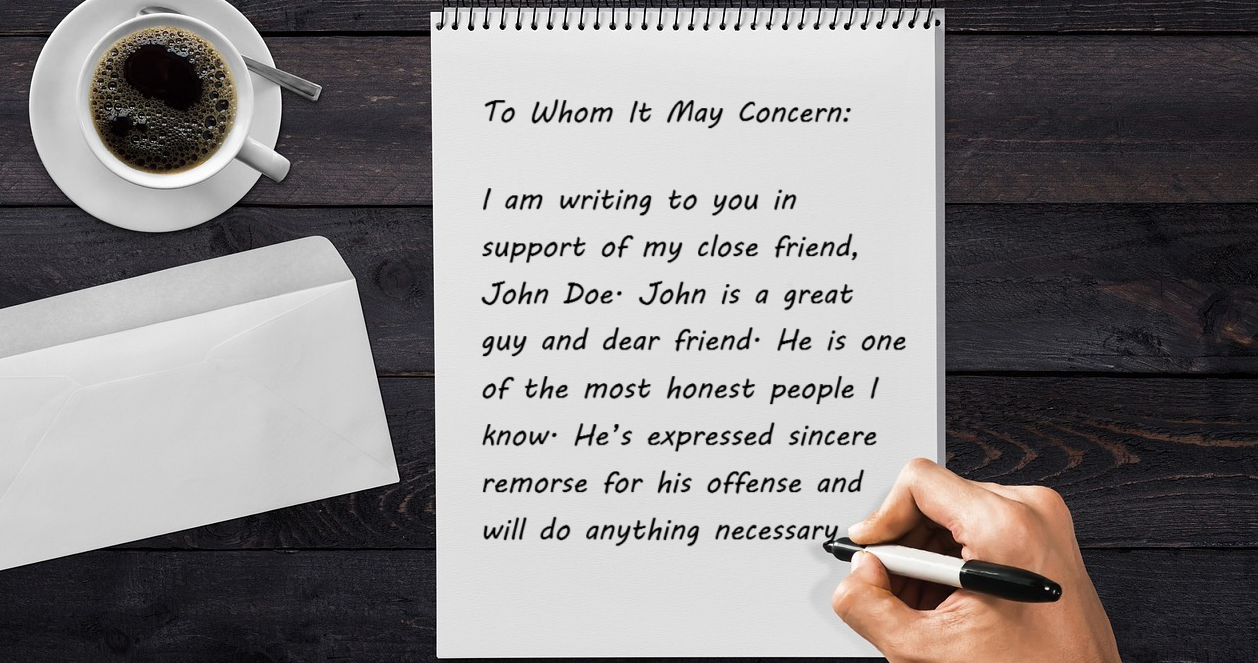
How do I write a letter if the defendant pleaded guilty?
Along with personal examples, the letter should include that the defendant expressed remorse for their actions or suffered anxiety due to being charged with a crime. Instead of being generic, write how you observed or know these statements to be true. For example, “he talks about how sorry he is for what happened every time I see him.” If you are aware of any personal circumstances or hardships that may have contributed to the commission of the crime, you should include this information in the letter. However, avoid being sensational or exaggerating. Be careful not to shift the blame to something or someone else. You can include the defendant’s problems or hardships, but do not be melodramatic or paint the defendant as the victim. The court will react adversely to any attempt to shift the blame.
How to Write a Powerful Character Letter for Sentencing
Anyone writing a letter to a prosecutor or judge on behalf of a loved one will want their letter to have a positive impact. Although no fixed set of rules applies in every situation, some general guidelines are as follows:
- typed letters have more impact than handwritten letters
- letters should include the name of the author, address, phone number or email, an electronic or actual signature, and a date
- if more than one letter is submitted, they should have unique content and formatting (not cookie-cutter versions of one another)
- letters should be from a mix of family, friends, business contacts, religious associates, and other individuals who know the defendant well
- letters should be concise and not overly lengthy,
- the author should briefly explain the nature of the relationship between themselves and the defendant
- the author should focus on the defendant and not tell their own personal stories or concentrate on their credentials
- at least one personal story is helpful to humanize the defendant and enhance the credibility of the letter
- if the defendant pleaded guilty or took responsibility, it is beneficial to relate any discussions where they admitted responsibility and expressed remorse
- it is best if the letters are proofread and grammatically correct
- get the letter to the defense attorney as early as possible because late or last-minute letters are often disregarded

What if the Defendant was Convicted at Trial and Maintained a Claim of Innocence?
Writing a persuasive character letter for sentencing where a defendant pleaded not guilty and was convicted at trial is challenging. It is often best to avoid referencing the charges and the victim (if one exists) when the defendant claims innocence. Judges loathe attacks on victims following a trial. Even though a defendant may be innocent and a victim may not indeed be a “victim,” upsetting the judge is not a practical approach to achieving a favorable sentence. If you disagree with the verdict, you can express your opinion, but keep it concise and refrain from attacking the prosecution, the police, or the complainant (if applicable). Instead, focus on the defendant and explain why they are a good person who is loved and supported. Tell the judge about the good things that the person has done. You can discuss the defendant’s family and the hardship that would result from an overly stiff sentence. You can also address the hardship a jail or prison sentence will cause the defendant; however, proceed cautiously, as the court tends to discount letters that unrealistically dramatize the situation. Be sincere, not dramatic.
What if the defendant’s driver’s license is an issue?
Whether the defendant loses their driving privileges due to a conviction may not be within the judge’s discretion. Many convictions result in an automatic license sanction, regardless of any court ruling. If you are aware of employment consequences, include that information in the letter, such as job loss due to driver’s license problems or professional license sanctions. The sentencing judge should be aware of the entire situation and the defendant’s background. However, be realistic when discussing the impact of a suspension or revocation on the defendant because melodramatic or catastrophic representations might inflame the court. Please be aware that the judge has no discretion when a driver’s license is suspended or revoked by law. If the license sanction is mandatory, it is best not to request relief in a character letter for sentencing from the judge, who does not have the authority to provide it.

What should I avoid in a character letter?
It is best not to suggest a specific penalty for the offense. Some judges find it imprudent when letters explicitly state that a particular sentence is appropriate. They see it as disrespectful to their authority. However, you can request that the Judge not impose a jail sentence or consider alternatives to jail (for example, a treatment program). Do not be critical of the law, the police, the prosecution, or the alleged victim (if there is one). Understandably, the defendant’s loved ones may be upset and even angry at one or more people involved in the case. However, such attacks will appear to be system attacks and shift responsibility. The judge will view an attack on the system as an insult to the court. Remember, you are trying to help a person convicted of the crime, not give a commentary or re-litigate a case you feel is unjust. Do not say anything untruthful.
Who should I get to write character letters for me?

It is essential to get letters from a cross-section of a person’s life. In other words, it is better to have a character letter for sentencing from an employer, a family member, a neighbor, a friend, and an AA sponsor (if there is one) instead of five (5) letters from only friends, family, or co-workers. Several letters from friends or family are better than nothing for individuals with limited options. Still, letters from individuals with varying relationships can be more persuasive if other options are available. A letter from a prominent person, like a politician or law enforcement officer, will only be effective if the person knows the defendant well. It is suspect if a person does not have a letter from a spouse or significant other.
Should my criminal defense lawyer help me obtain character letters?
Character references can provide a sentencing court with essential insight into the person being sentenced and positively influence the judge’s sentence. Hearing from people who know the defendant is essential to give that person humanity, rather than just a case number. The criminal defense lawyers with LEWIS & DICKSTEIN, P.L.L.C., have found that following these simple steps will help you write a great sentencing character letter.
Remember to send letters only to the defense lawyer, never directly to the judge, probation officer, or prosecutor. The defense lawyer will know how to present the letters to maximize their impact on the court.

Can character letters help the defendant get their sentence reduced?
If you or a loved one is facing a misdemeanor or felony charge and needs someone to truly and fearlessly fight for a reduced charge or sentence, call LEWIS & DICKSTEIN, P.L.L.C., and we will promptly contact you. If you already have a lawyer but feel that something doesn’t seem right, or if you think more could be done, feel free to call us for a free consultation. Our seasoned, veteran defense lawyers will take the time to talk with you, answer your questions, and address your concerns. If there is a way to help you, we will find it.
Call us today at (248) 263-6800 for a free consultation or complete an online Request for Assistance Form. We will contact you promptly and find a way to help you.
We will find a way to help you.
We Are Not Afraid to Win!



























Frequently Asked Questions
How do I write a letter of support to a sentencing judge?
You write a letter of support to a sentencing judge using the following steps:
- Address Your Letter to the Judge, BUT send it to the defendant’s attorney.
- Establish a Clear Relationship with the Defendant. Make it clear how you know the defendant and the nature of the relationship.
- Be Truthful. Be concise, truthful, and not melodramatic. Simply provide the judge with the necessary facts and information they need to know about the defendant, without elaborating further.
- Be Positive. Focus on the positive. It helps to discuss how the defendant will apply the lessons from the case to create a better future.
- Include a Discussion of the Crime. At a minimum, acknowledge that you know about the charge or conviction. Do not detract from the defendant’s acceptance of responsibility. Focus on how the defendant accepts responsibility and is remorseful.
- Do Not Suggest Penalties for the Crime. Do not suggest a specific sentence. It may be acceptable to ask the judge not to impose jail or prison time, provided the request is realistic.
What to include in a letter to the judge before sentencing?
- You should include the following information:
- Proper name and address for the judge.
- Your full name.
- You should type the letter if possible.
- The letter should be one page or less, if possible.
- Include your address, email, and phone number.
- The person writing the letter should sign it.
How do I write a letter requesting leniency in sentencing?
A letter requesting leniency is most effective if it is well-written, typed, and includes the author’s contact information. The letter should be heartfelt yet factual, avoiding drama. Letters that demonstrate the defendant’s willingness to take responsibility and express remorse are most effective. Letters that seek to blame others or the victim (if one exists) tend to be the least effective and can even backfire.
How do you write a character reference for sentencing?
Anyone can write a character letter for sentencing; however, the defendant must ensure that all letters are submitted only to the defense lawyer, not the probation department or judge. A skilled defense attorney will know if a letter needs to be changed or if it should not be submitted to the judge. Despite the best intentions, many who write letters draft a letter that hurts more than it helps.
How do you write a good court letter?
It is best to take your time and write the letter. If you have someone who can proofread the letter, having one or two people check it for spelling, grammar, and structure is best. If possible, type the letter on 8 1/2 x 11-inch paper.
How do you start a letter to a judge?
You start the letter to the judge by addressing them as “Your Honor” or “Judge _______.” Begin by introducing yourself and explaining the relationship between you and the defendant.
Is it a good idea to write a letter to the judge?
It is a good idea to write a letter to the judge on behalf of a defendant; however, send the letter to the defense lawyer, not the sentencing judge. The defense lawyer will collect all the letters, proofread them, and submit them to the Court at the appropriate time.
How do you greet a judge in a letter?
It is best to refer to a judge as “Your Honor” or “Judge (last name).”
How do you write an impact letter to a judge?
Judges do not have the power to change charges against a defendant. Letters regarding sentencing should only be submitted to a judge through a defense lawyer. They should be clear, professional, concise, typed, grammatical, and pragmatic.
How long should a leniency letter be?
Ideally, a letter requesting leniency or a favorable sentence should be no longer than one typed page.
What is a character letter to judge?
A character letter to a judge is a letter written by someone who knows the defendant and can provide information that, hopefully, will persuade the judge to order a lenient sentence or one that focuses on rehabilitation rather than punishment.